Osmia Trips
Apply
The journeysEgyptNepalPhilippinesHow it worksApply

Trip 2 · Autumn 2027

Nepal, on foot

Culture, Buddhist heritage, jungle, river and Himalaya, in that order - and nine days walking with the mountains all around.

  • 23 October – 17 November 2027
  • 25 nights · 26 days
  • 8–16 guests
  • from €5,400 per person

The journey

Down to the jungle, then up into the mountains.

Nepal is a staircase: the plains at a hundred metres, the hills at a thousand, the peaks at eight. This journey walks the staircase. It starts in the streets of Kathmandu, drops to the river and the jungle, pauses at the place where the Buddha was born, and climbs - first to Pokhara by its lake, then for nine days on foot through the Annapurna region, sleeping in teahouses under the highest mountains on earth.

Late October is the best of the year here: the monsoon has washed the sky, the views are long, the nights are cold and clear. We rest before the trek and after it. The walking days are deliberately left unprogrammed beyond the walking itself. The physical journey through the mountains is already the experience.

The dates are fixed. The trekking route is chosen for scenery, difficulty, crowds and the quality of the teahouses; our working route is Khopra Ridge and Poon Hill, and the final one is confirmed with the group in the spring.

The route, in nights

  • Kathmandu3 nights
  • The Trisuli river1 night
  • Chitwan3 nights
  • Lumbini2 nights
  • Pokhara3 nights
  • The Annapurna region, on foot9 nights
  • Pokhara, after2 nights
  • Kathmandu, to finish2 nights
  • 25 nights · 26 days23 Oct – 17 Nov 2027
  • Group8 to 16 guests
  • Pricefrom €5,400 per person
  • Deposit€900 holds a place
  • FitnessFive to six hours' walking a day, for nine days

The chapters

Six chapters. One long walk.

Each one a different Nepal. The mornings on the mat, the free afternoons and the long dinners run through all of them.

A square in Kathmandu.
Kathmandu3 nights · 23–26 October

Arrival, and the streets

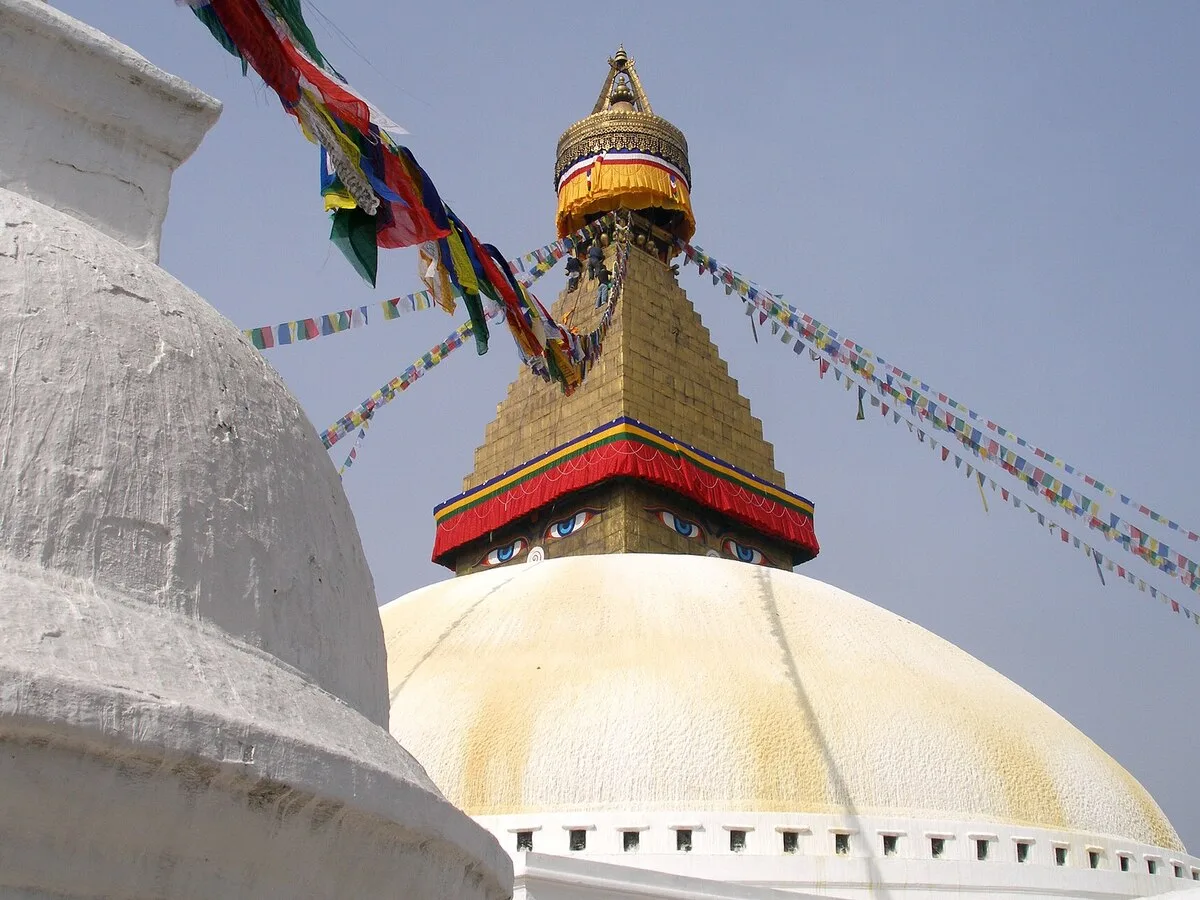
Kathmandu is loud, holy and falling down and being rebuilt at the same time, and the best way into it is on foot. The first days are for the group to land and find each other: the old squares, the great stupa at Boudhanath at dusk when the pilgrims circle it, the food, an evening of orientation where we walk through the month ahead. Nobody is rushed.

  • Durbar Square and the old city
  • Boudhanath at dusk
  • Swayambhunath
  • First morning practice
  • The welcome dinner
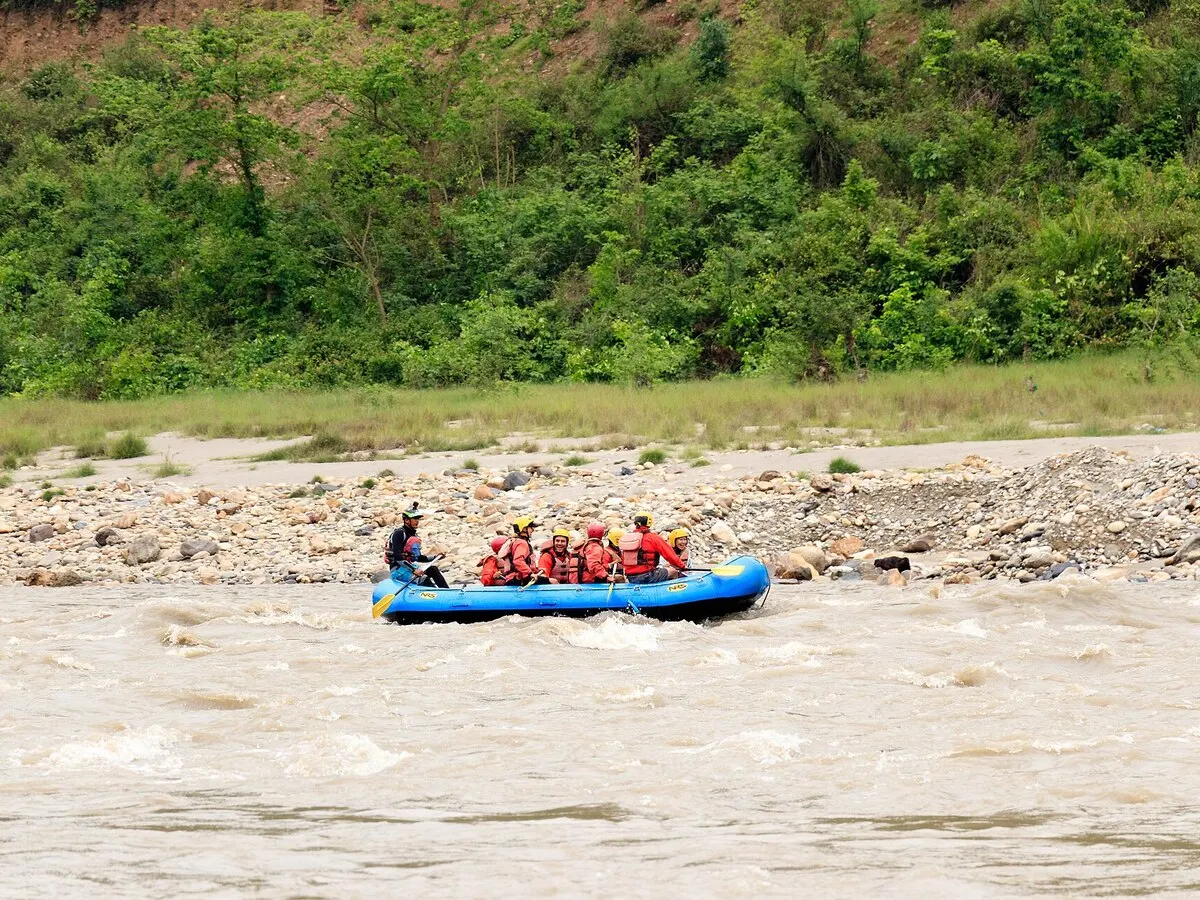
Rafting on the Trisuli river.
The Trisuli1 night · 26–27 October

Two days on the river

We leave Kathmandu by water. The Trisuli runs south-west out of the hills towards the plains, and two days of rafting on it - grade two and three, big and fun, never frightening - replace what would otherwise be a long day in a bus. A night camped on a river beach, food cooked on the sand, stars.

  • A licensed operator with a clean record
  • Grade II–III water
  • A night on a river beach
  • Arrival in Chitwan by river
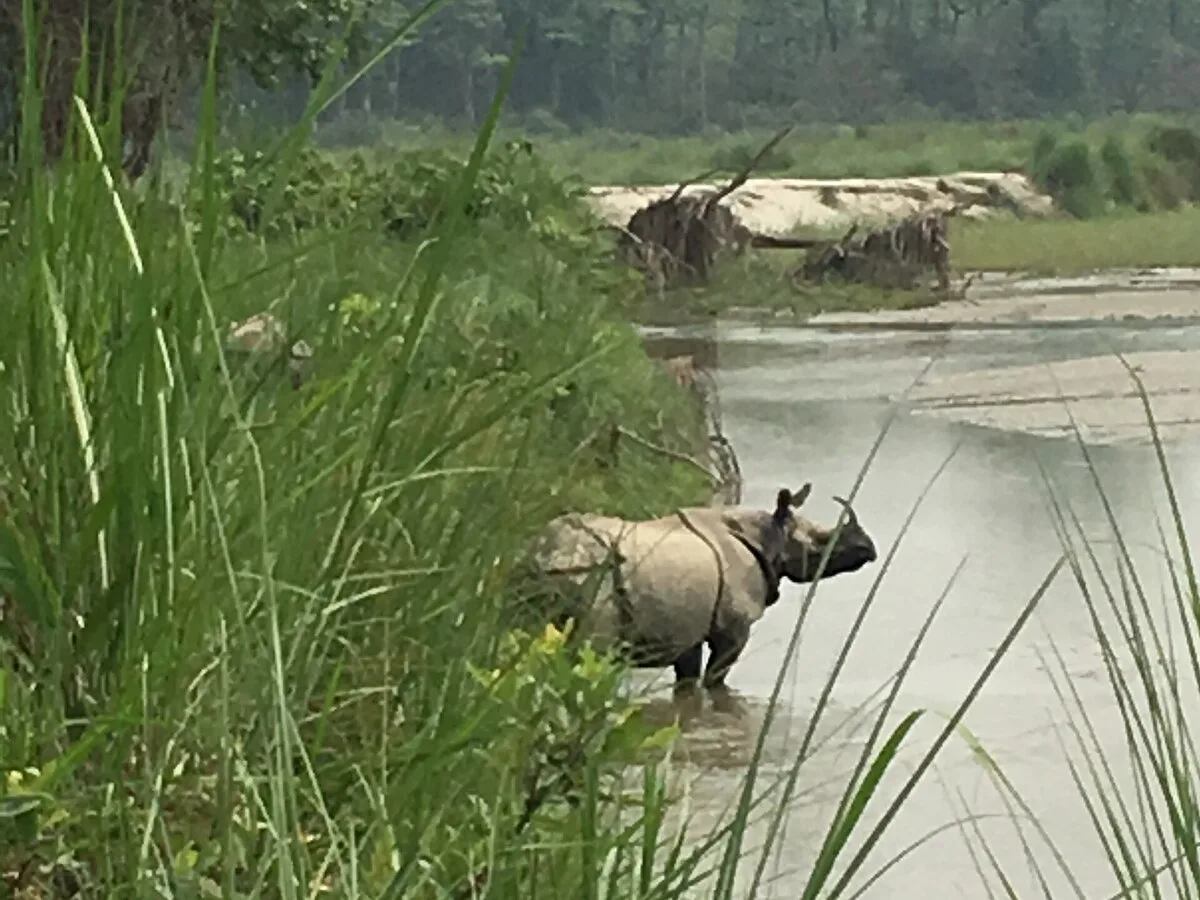
The jungle at Chitwan National Park.
Chitwan3 nights · 27–30 October

The jungle

A completely different ecosystem: sal forest, elephant grass, the Rapti river with crocodiles on the banks and rhinos in the shallows, and a warm, slow air after the hills. Safaris on foot and by jeep at dawn, canoes in the afternoon, and evenings with the Tharu people who have lived here longer than the park has existed. A rest chapter before the climb.

  • Jeep and walking safaris
  • Rhinos, deer, birds, with luck a tiger's track
  • A canoe on the Rapti
  • A Tharu evening
  • Rest
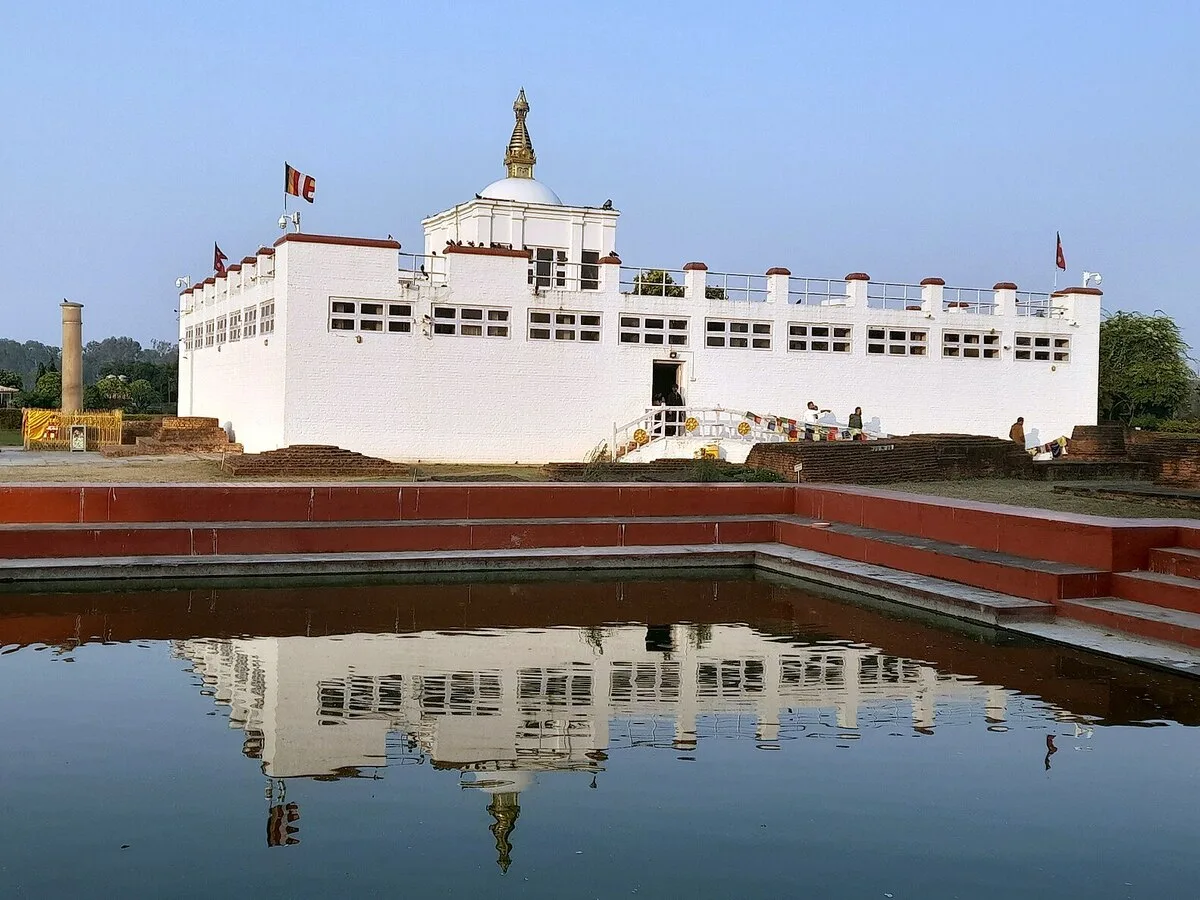
The Maya Devi temple at Lumbini.
Lumbini2 nights · 30 Oct – 1 Nov

Where the Buddha was born

Three hours west along the plains is a garden with a pond, a tree and a stone that marks a birth two and a half thousand years ago. Around it, monasteries built by every Buddhist nation on earth. We spend two quiet days here: sitting, walking, and one morning of meditation with the monks - spirituality connected to the place, not imported to it.

  • The Maya Devi temple and the garden
  • The monastic zone by bicycle
  • Meditation with a monastery
  • Contemplative days
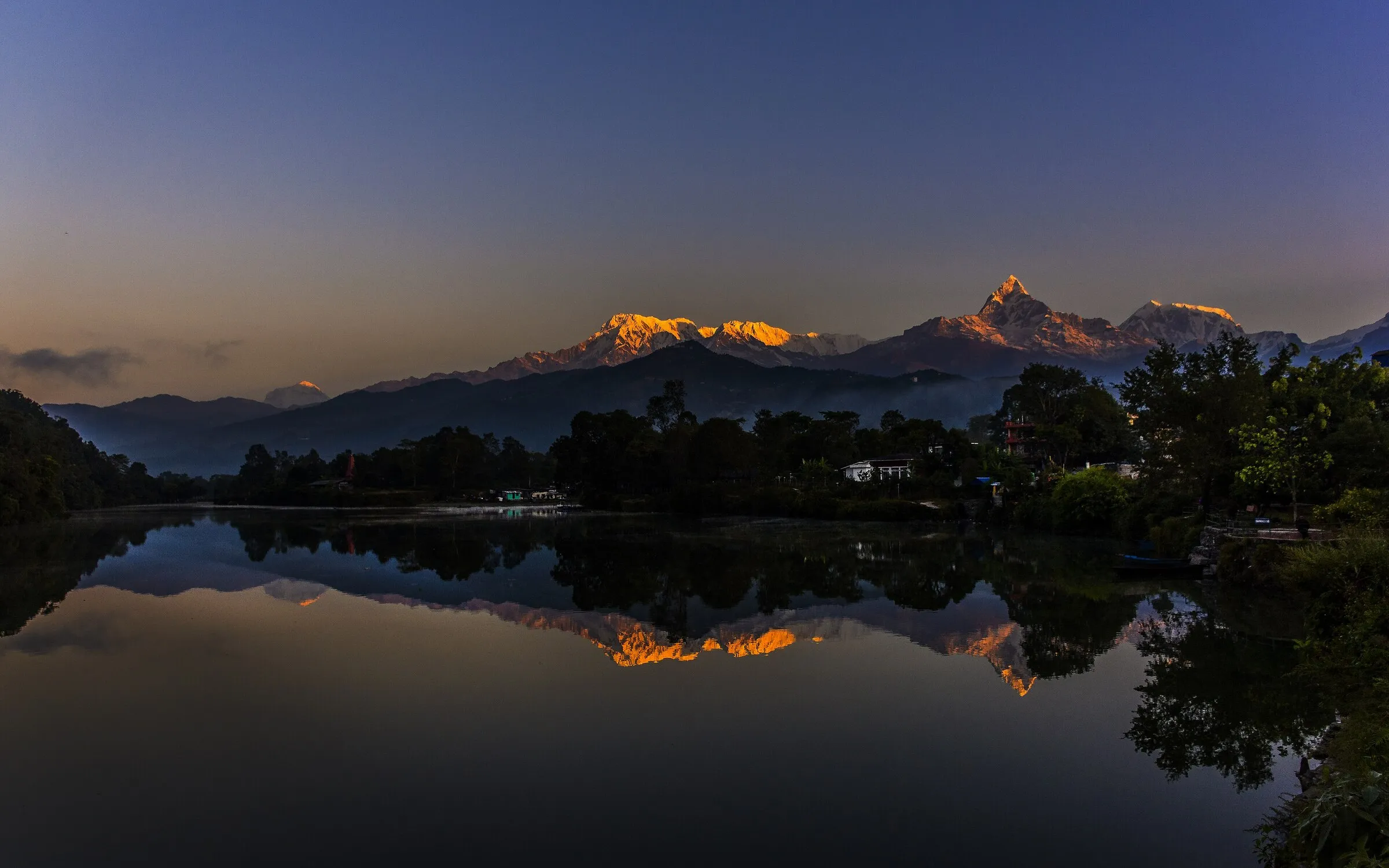
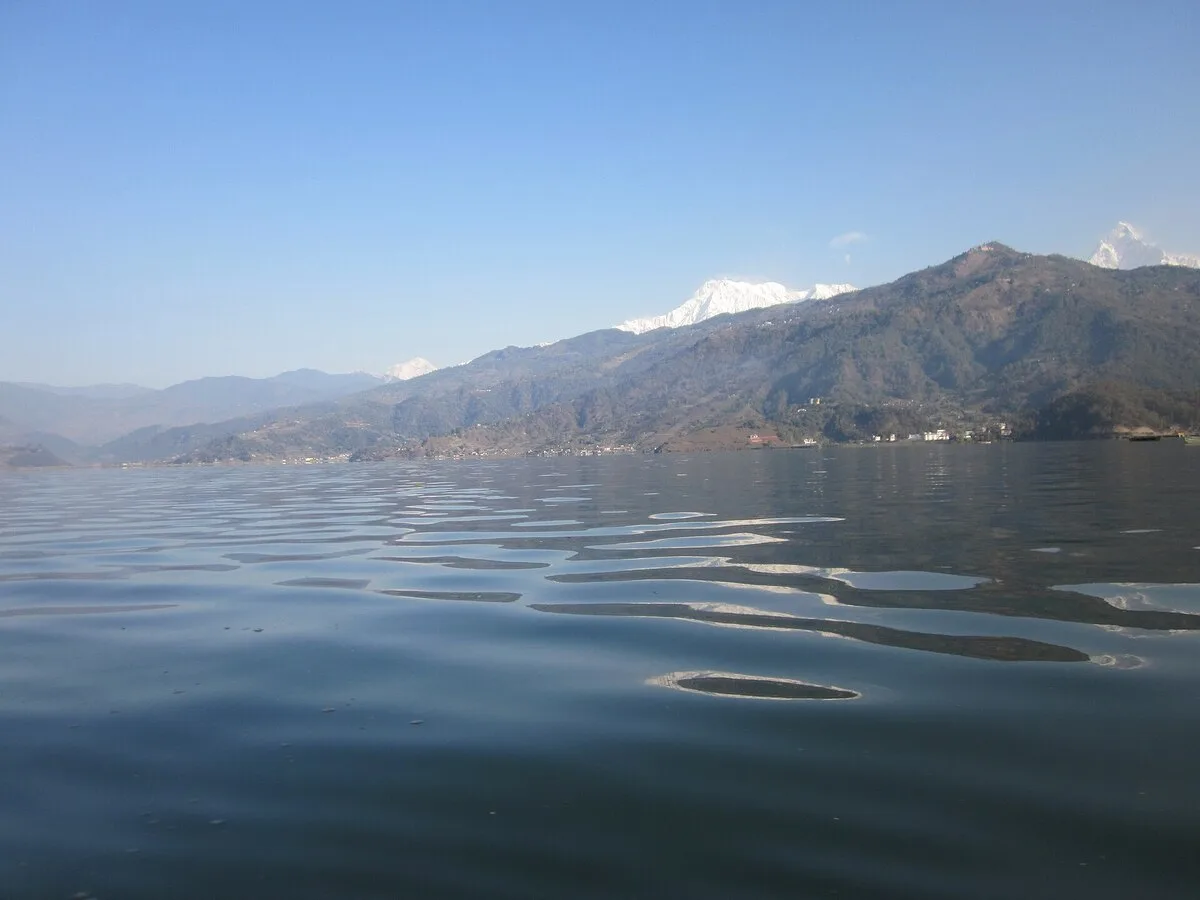
Phewa lake at Pokhara in the morning.
Pokhara3 nights before · 2 after

The soft base under the mountains

Pokhara sits on a lake with the Annapurna range standing straight up behind it - on a clear morning, Machapuchare fills the window. It is the softest place on the journey and we use it twice: three nights before the trek to rest, practise, sort the bags and eat well, and two nights after to come down, sleep, swim in the lake and be slow. Paragliding from Sarangkot, for those who want it, is the one thing we do not include and will happily arrange.

  • The lake at first light
  • Yoga and breathwork by the water
  • Preparation, then recovery
  • Good food
  • Optional paragliding
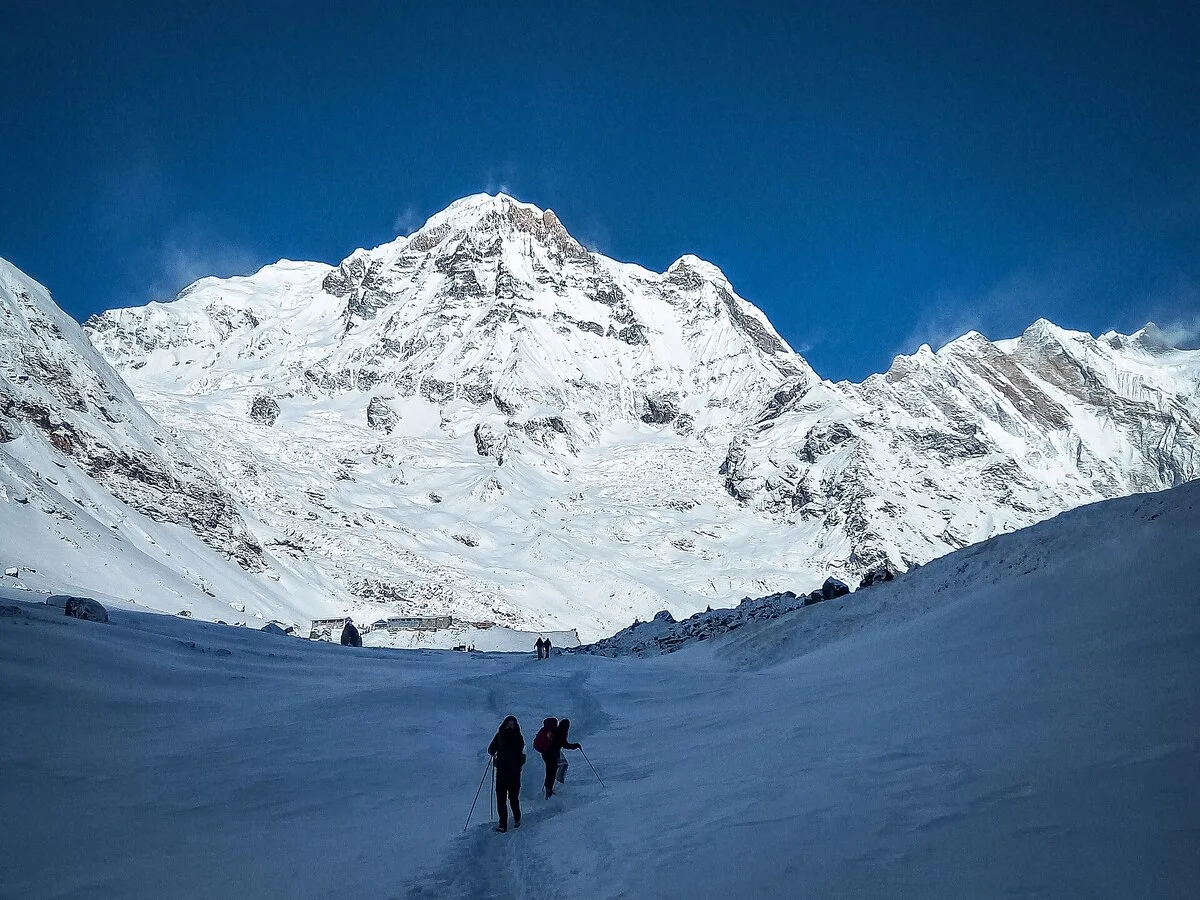
A trail in the Annapurna region.
Annapurna9 nights · 4–13 November

Nine days on foot

The centre of the journey. Nine days walking through the Annapurna region with a licensed trekking company, professional guides and porters for the main bags, sleeping in teahouses, eating dal bhat, watching the light move on mountains twice the height of anything in Europe. Our working route is Khopra Ridge with a sunrise on Poon Hill: quieter than the base-camp trails, community-run lodges, a high point around 3,600 metres and, for those who want it, a day up to Khayer lake at 4,500. Five or six hours of walking most days, with breaks. Mornings begin with mobility and breath; evenings end early by the stove. Nothing else is scheduled. The walk is the point.

  • Khopra Ridge and Poon Hill, our working route
  • Licensed company, guides and porters
  • Teahouse nights
  • Mobility and breath awareness each morning
  • Permits and insurance handled

The final route is confirmed with the group in the spring, against scenery, difficulty, crowds, teahouse quality, safety and season. Annapurna Base Camp is the alternative.

Kathmandu.
Kathmandu again2 nights · 15–17 November

Back where we began

A short flight from Pokhara, and the city we walked into three weeks ago looks different - or we do. Two days with nothing much planned: a last temple, a last long lunch, the shops, the final dinner. Everyone flies home the next morning from the same airport.

  • Free days
  • The final dinner

The rhythm

What a day looks like

The itinerary is a strong shape with room inside it. On the trek the shape is the trail; everywhere else, it is this.

Who this journey is for

You do not have to be a mountaineer. You do have to want to walk.

Nine days on foot at altitude is the heart of this one. If that sentence makes you sit up, read on. If it makes you tired, Egypt or the Philippines may be your journey.

You want a real challenge, held safely

The trek is demanding and it is not technical: no ropes, no ice, a well-walked trail, guides who do this for a living, and a route chosen for a mixed group. You will be tired in the evenings and you will sleep like a child.

You want simplicity

Teahouses, dal bhat, a bag carried by someone stronger than you, a day that is nothing but walking. After a week of it the question of what to do next stops arriving.

You are drawn to the Buddhist thread

Lumbini, the monasteries, the stupas of Kathmandu, the prayer flags on every pass: this is a country where the tradition is lived rather than displayed, and the journey gives it time.

You want company without a crowd

Eight to sixteen people, the same ones, for four weeks. A river beach, a jungle, a mountain trail and a lot of tea. You will also have afternoons to yourself and, off the trail, a room of your own if you choose one.

You are not sure about the altitude

Our working route tops out around 3,600 metres, with an optional day higher; most healthy adults manage it with a slow ascent, which is built in. We ask about your health when you apply, and we would rather talk it through than have you guess.

The price

One price. Everything in it.

The price covers the whole 25 nights - every stay, every transfer, the river, the flights inside the journey, the trekking company with its guides and porters, the permits, and most meals.

Included

  • All 25 nights: hotels, the lodge at Chitwan, the river camp, the teahouses
  • Every transfer inside the journey, the domestic flight Pokhara–Kathmandu, the private road transport
  • Breakfast and dinner every day; all meals on the river, in Chitwan and on the trek
  • The rafting, the safaris, the entries and the guides in every chapter
  • The trek: licensed company, guides, porters for the main bags, permits
  • Morning yoga, breathwork and meditation with Lisa and Balder
  • Lisa and Balder with you for all 26 days

Not included

  • International flights to and from Kathmandu
  • The Nepal visa on arrival, USD 50 for 30 days
  • Travel and medical insurance covering trekking to 4,500 metres, which is required for the permits
  • Lunches on free days, drinks, tips, hot showers and charging on the trail
  • Sleeping bag hire, paragliding, and anything else you add on your own

A deposit of €900 holds your place. The balance is due 90 days before departure, on 25 July 2027. Nothing is charged until the journey is confirmed with at least eight guests, and if it is not, the deposit comes back in full. The terms say the rest, in plain words.

Why Nepal

Because walking for nine days changes what you think you need.

There is a particular clarity that arrives around the fourth day of a trek. The list in your head has shrunk to water, food, the next village and the weather. Your phone has no signal and you have stopped reaching for it. Your body, which you have been carrying around like luggage, has become the thing you are. We have not found a faster way to it than the Himalaya, and we have not found a more beautiful one.

But a journey that was only the trek would be half a country. Nepal is also the plains, the jungle, the river that runs from one to the other, and the garden where a prince became the Buddha. We wanted to walk the whole staircase, from the low warm country up to the ice, so that the mountains arrive at the end of something rather than the start.

And then Pokhara, twice, because you should not go up to those mountains in a hurry, and you should not come down from them in one.

Lisa and BalderOsmia Trips

Apply

Tell us who you are.

An application is a letter, not a booking. Tell us a little about yourself and why this journey, and we will write back within a few days - with our questions, the full day-by-day plan, and the next step if it fits.

Places are given in the order applications arrive, once we have talked. A deposit holds one. Nothing is charged before that.

The journey

We use your address to answer this application and for nothing else. It is not added to any list. Ask us to delete it and it is gone the same day - hello@osmia.day.